Ant control
Seeing ant trails? Learn how they form, where colonies nest, and what treatment and prevention involve for kitchens, patios, walls, and landscapes in Mission Viejo.
Explore ant controlLocal pest inspection and control · Call to confirm availability
Local pest control for homes, rental properties, offices, restaurants, retail spaces, and managed buildings in Mission Viejo. Tell us what you're seeing. Our inspection-first approach starts with the signs you can document. Then we match you with the service that fits.
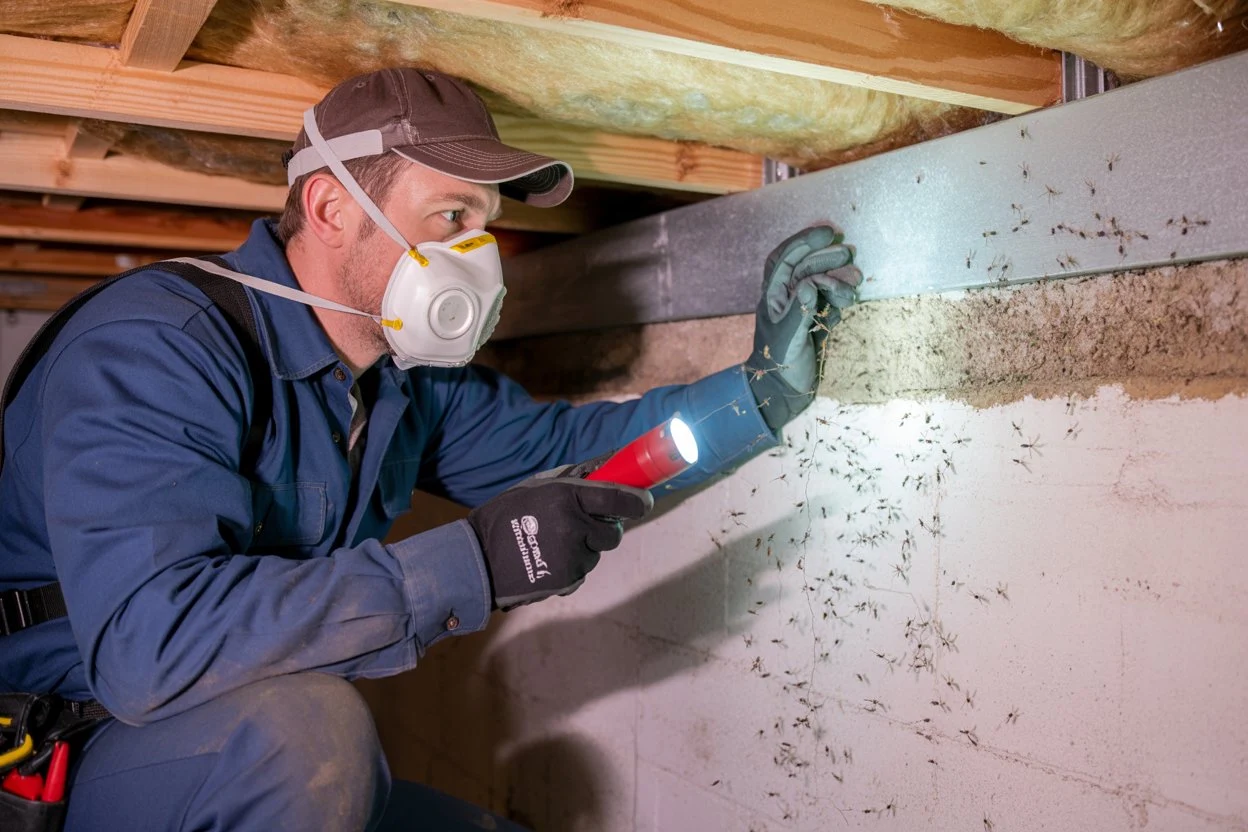
Photos, droppings, damage, trails, webbing, noises, and the time of activity can help narrow the source.
Compare signs in our pest articles →Pest services
Choose the service that matches the evidence you're seeing. Each page explains how to identify the pest, what an inspection checks, treatment options, prevention, and follow-up.
Seeing ant trails? Learn how they form, where colonies nest, and what treatment and prevention involve for kitchens, patios, walls, and landscapes in Mission Viejo.
Explore ant controlSeeing wings or mud tubes? Learn the warning signs of termites, how an inspection works, treatment options, and prevention for Mission Viejo properties. Request termite control service.
Explore termite controlHearing or seeing rats or mice? Find the source with rodent inspection, control, exclusion (sealing the gaps pests use to get in), and prevention guidance for Mission Viejo homes and businesses.
Explore rodent controlGet practical help identifying and controlling cockroaches in Mission Viejo kitchens, bathrooms, garages, drains, and businesses.
Explore cockroach controlFewer spiders for Mission Viejo properties. We inspect, remove webs, seal entry points, and cut the insects they feed on.
Explore spider controlBed bugs? See the signs, how to prepare, and what treatment, monitoring, and prevention involve for Mission Viejo homes and lodging properties.
Explore bed bug exterminationRequest help assessing bees or wasps around eaves, wall voids, trees, patios, and high-traffic areas in Mission Viejo.
Explore bee & wasp removalReduce mosquito breeding and resting sites with property inspection, source reduction, and targeted control guidance in Mission Viejo.
Explore mosquito controlReal customer reviews
★★★★★
“I was initially concerned about the cost, but they efficiently managed to remove the bee infestation from our attic in under two hours. Compared to a previous company, there was no need for follow-up visits as their initial treatment has held up well over the past few weeks.”— Riggs, Google review
★★★★★
“The rodent problem turned out to be more extensive than I initially thought, but the technicians were thorough and methodical in addressing it. After a few visits, the issue has significantly improved, and I’m relieved to see results.”— Simon, Google review · Home inspection, hornet & wasp extermination
★★★★★
“Amazing termite treatment with detailed inspection and long-lasting protective barrier.”— Stephanie, Google review · Termite treatment
★★★★★
“Thorough inspection, very detail-oriented.”— Patricia, Google review · Home inspection
★★★★★
“Spiders gone quickly, no mess left.”— Google review
★★★★★
“Unbelievable transformation within weeks!”— Ruth, Google review
Local pest activity
Warm weather, irrigated landscaping, mature plants, attached garages, tile roofs, patios, and shared walls can all create pest routes. They differ from one property to the next.
Ant trails often connect outdoor colonies with food or moisture indoors. Check counters, sinks, plumbing gaps, patio edges, irrigation zones, and plants touching the building. Repeated surface spraying may move a trail without addressing the colony.
Read about ant control →Drywood termites may remain inside structural or finish wood, while subterranean termites generally maintain a route to soil. Swarmers, discarded wings, mud tubes, pellets, and unexplained wood changes should be assessed before treatment is selected.
Read about termite control →Rats and mice use rooflines, garage gaps, utility openings, branches, fences, and wall voids. Effective rodent control combines monitoring, cleaning, and sealing entry points, once the routes the animals use have been found.
Read about rodent control →Spiders often remain where insect prey and sheltered web sites are available. Cockroach activity is more closely tied to species, moisture, food, cardboard, drains, appliances, or exterior entry. Knowing the pest decides which conditions and treatment areas matter.
Spider control · Cockroach controlHomes
Residential pest control should fit how your home is built and how you use it, including people, pets, storage, kitchens, garages, and outdoor areas.
Detached homes can have several links between landscaping and the building. Examples are branches near roofs, side-yard utilities, patio covers, eaves, garages, and foundation edges. Inspection should follow the route from exterior conditions to indoor evidence.
Shared walls, utility lines, attics, drains, and common landscaping affect where a pest problem starts. They also affect who can fix it. Record the exact spot in your unit and any activity in common spaces before service is planned.
Outdoors, focus on:
Indoors, focus on:
Business properties
Commercial pest control needs clear monitoring, service records, fixes for problems found, and a schedule that fits how the property operates.
Places to watch in a restaurant or food business:
Staff reports and cleaning records can show whether sightings follow a particular shift, delivery, or maintenance issue.
These places can bring in or support pests:
Monitoring should cover staff-only areas as well as customer spaces, without getting in the way of normal operations.
Pests in multi-unit buildings can travel along plumbing lines, wall voids, hallways, waste areas, and landscaping. Accurate reports for each unit, arranged access, preparation instructions, and follow-up show whether a problem is isolated or affects several areas.
Inspection and treatment
We start with evidence. Then we identify the pest, control it, and take practical steps that make follow-up easier to judge.
Review where and when activity appears. Then check likely entry points, harborages (places pests hide), moisture, food, damage, droppings, trails, webbing, or nesting material.
Use the evidence, the pest's behavior, and where it was found. That tells it apart from look-alike insects, rodents, wildlife, or old damage.
Select pest-specific treatment, monitoring, removal, sanitation, or exclusion steps based on the findings and the areas that can be accessed safely.
Fix the food, water, shelter, and entry conditions that matter. Then check known activity zones for fresh evidence that shows whether the problem has stopped.
Local conditions
The region can affect how many pests you get. But the source still depends on the moisture, landscaping, construction, storage, and access at your property.
Mild seasons allow many insects to remain active for long periods. Heat changes how ants forage and how fast mosquitoes develop. Cooler nights may send rodents into attics, garages, wall voids, or storage.
Irrigation, drains, leaks, plant saucers, shaded soil, and dense plants can provide water or protected habitat. The practical response is to find persistent moisture near the affected area rather than assuming every landscaped space is a problem.
Connected plants, slopes, fences, block walls, utility lines, and rooflines can serve as travel routes. Outdoor pest pressure becomes an indoor issue only when a building also provides an opening, food, water, or shelter.
Local service areas
These neighborhood pages describe local property features and what we check first.
Lakeside yards and patios can hold water and shelter. We look at containers, roof access, and signs of ants, rodents, mosquitoes, spiders, and termites.
Shared walls and landscaping mean checking your unit and the common areas around it, including patios, garages, and utility routes.
Homes near open space need a look at tile roofs, attics, garages, block walls, patio covers, and plants. Pests here move with the seasons.
Slopes and multi-level lots need a look at retaining areas, rooflines, side yards, and mature plants for rodents, ants, and gophers.
Homes here share landscaping and duties with the community. We check patios, garages, utility openings, irrigation, and drains.
Newer homes here need a look at tight side yards, attached garages, standing water, outdoor lighting, and pest entry points.
Clear pest information
Mission Viejo Precision Pest Control uses an inspection-first service approach for homes and businesses across Mission Viejo.
We start with the pest signs and conditions at your property, so the inspection stays on the actual issue.
Houses, condos, rentals, offices, restaurants, shops, and managed buildings across Mission Viejo.
You’ll know what evidence to keep, what we inspect, and how treatment and exclusion decisions are made.
We tell you what prevention can realistically do at your property.
To ask about an infestation or arrange the next step, call (949) 288-4697. Include the location and timing of the activity so the conversation begins with useful information.
Pest control questions
Ants, termites, rats, mice, spiders, cockroaches, mosquitoes, bed bugs, bees, and wasps are among the pests property owners may encounter. The exact concern depends on the building, landscaping, moisture, food, access points, and season.
Consider a professional pest inspection when activity keeps returning, the pest cannot be identified, contamination or property damage is possible, or the affected area is unsafe or difficult to reach.
Homes in Southern California can get drywood and subterranean termites. Discarded wings, mud tubes, pellet-like droppings, or unexplained wood changes are reasons to request an inspection.
There's no single schedule for every property. Service can be one-time, followed by rechecks, or part of an ongoing plan. The pest, the level of activity, the building, the treatment, and monitoring results decide which.
Yes. Service information is available for homes, condos, townhomes, restaurants, offices, shops, apartments, and managed properties in Mission Viejo.
Start with the right information
Use the path that matches what you know. You don't need to identify an unfamiliar pest before asking for help.
I know the pest
Go directly to treatment and inspection information for termites, rodents, ants, cockroaches, spiders, bed bugs, mosquitoes, and other pests.
Browse pest control services →I only see signs
Use our pest articles to compare droppings, trails, wings, nests, webbing, damage, and other signs before deciding what to request.
Read pest identification articles →I want local context
Review the current areas we serve and the property features that can change inspection priorities from one Mission Viejo community to another.
View areas we serve →Contact us
Describe the pest if you know it and exactly where you see it. Say when it started, how often it returns, and what you've already tried. Mention whether the property is a home, rental, business, restaurant, office, or managed building.
If it is safe to do so, keep a clear photo or specimen and avoid disturbing droppings, wings, mud tubes, nests, or damaged materials before they can be documented.