Frequent biting around patios or shaded entries
Record where this evidence appears and whether it is fresh or recurring. Its location can help focus the mosquito inspection.
Mission Viejo pest service
Mosquito pressure is best addressed by finding water sources and shaded resting areas. Even small containers can produce mosquitoes, so a yard-by-yard inspection often matters more than treating the air alone.
Pest evidence
For mosquito control, record the exact location, time, and frequency of fresh evidence before cleaning or applying a product. Several signs considered together are more useful than one clue alone.
Record where this evidence appears and whether it is fresh or recurring. Its location can help focus the mosquito inspection.
When checking for mosquitoes, note the time and part of the building where this sign occurs. Repeated activity can help identify travel or nesting areas.
During a mosquito control assessment, photograph visible damage or physical evidence before repair when it is safe. New changes are more useful than old, undated signs.
Compare this possible sign of mosquitoes with other evidence at the property and note any related moisture, food, shelter, or access conditions.
Property conditions
Irrigation, containers, clogged drains, bromeliads, tarps, fountains, and dense vegetation can create localized breeding or resting habitat. Some invasive mosquitoes use very small water-holding objects.
Inspect this condition near the areas where mosquitoes has been reported. It may connect exterior activity with an indoor route.
For mosquitoes, check whether this resource is available consistently and whether activity increases when conditions change.
Protected spaces can allow mosquitoes to remain close to the building. Look for fresh evidence before making repairs or removing materials.
Inspection and service
The mosquito control process should confirm the pest, connect activity with property conditions, explain the selected control steps, and provide a practical way to check results.
Inspect containers, drains, irrigation, and vegetation
Identify removable breeding sources
Recommend water management and maintenance
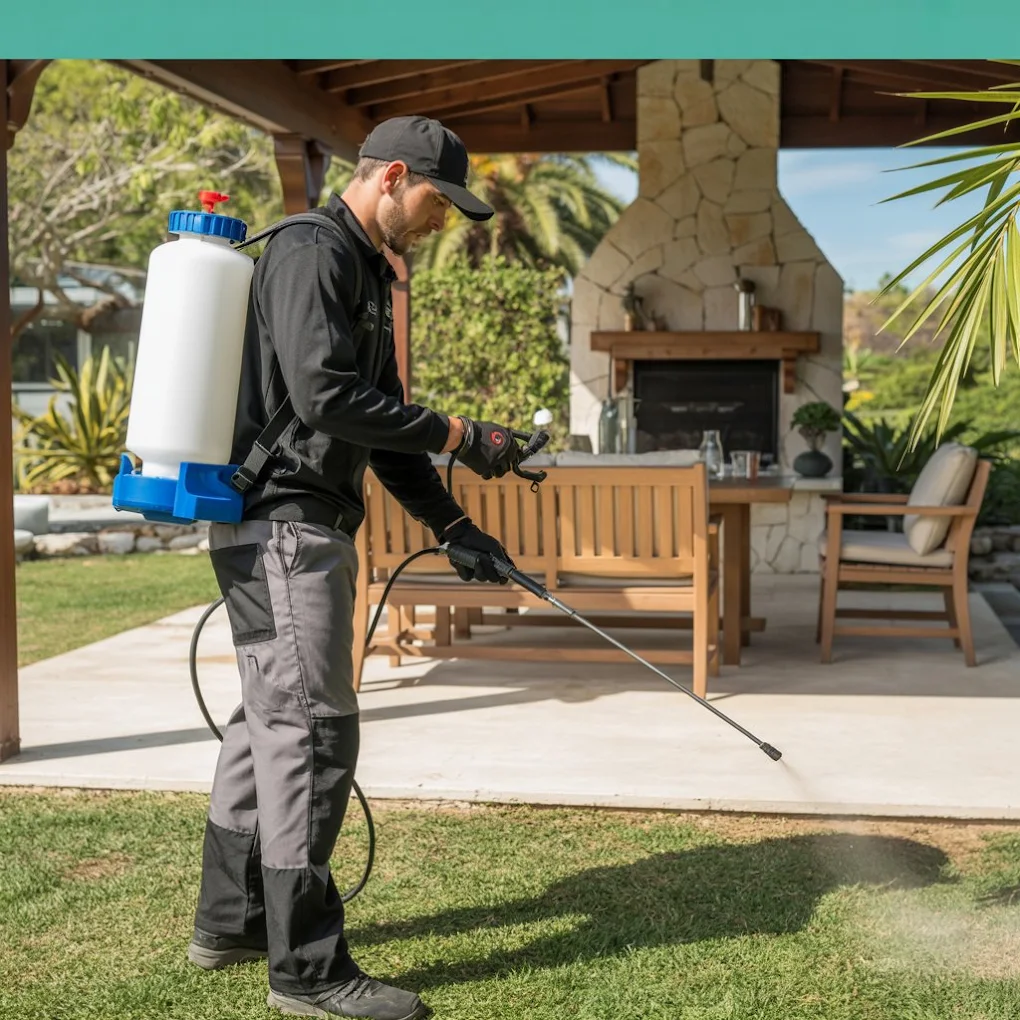
Apply targeted control to suitable resting sites when needed
Inspection findings
Mosquitoes may develop in plant saucers, toys, buckets, drains, tarps, clogged gutters, or other small pockets of water. Walk the property after irrigation or watering and note shaded resting areas as well as containers. The nearest large water feature is not always the source.
Emptying or correcting standing water interrupts development, while targeted treatment may reduce adults resting in vegetation or protected areas. The balance depends on where mosquitoes are breeding, how the yard is used, and whether neighboring sources are contributing to pressure.
New water can collect after irrigation, rain, cleaning, or yard work. Recheck the same containers and drains, keep vegetation manageable, and note whether biting activity changes by time of day and location.
Before service
Before mosquito control, include the exact place where activity first appeared, how often it returns, recent moisture or building changes, and any products, repairs, or cleanup already completed. Clear photos or a safely collected specimen may also help with identification.
Pest prevention
Prevention should address the food, water, shelter, or access that supports mosquitoes. The useful steps are the ones connected to findings at the individual property.
Homes
Backyards, patios, side yards, and entry plantings should be inspected systematically. Neighboring sources can influence activity, so ongoing source reduction is important.
Residential pest control information →Businesses
Outdoor seating, planters, drains, decorative water, and irrigation schedules should be incorporated into routine facility checks.
Commercial pest control information →Service areas
When assessing mosquitoes, neighborhood features can influence pest pressure, but the inspection still needs to evaluate the building, landscaping, moisture, storage, and access at the individual property.
Service questions
Some species can develop in very small water-holding containers. The duration and condition of the water matter more than its size.
Adults can move in from nearby areas, and untreated water can produce a new generation. Source reduction is central to lasting improvement.
No. Some local species bite during daytime, while others are most active around dawn or dusk.
A properly maintained and circulating pool is less suitable, but covers, adjacent drains, toys, and neglected water features may hold breeding water.
Related services
Reduce spider activity with inspection, web removal, prey management, exclusion, and practical prevention for Mission Viejo properties.
Explore spider controlUnderstand flea life cycles, pet-area inspection, treatment preparation, and follow-up for Mission Viejo homes and yards.
Explore flea controlReduce tick habitat and exposure with inspection, landscape guidance, pet-area planning, and targeted property control in Mission Viejo.
Explore tick controlService request
When calling about mosquito control, include the exact location, how long the activity has been present, and any steps already taken.